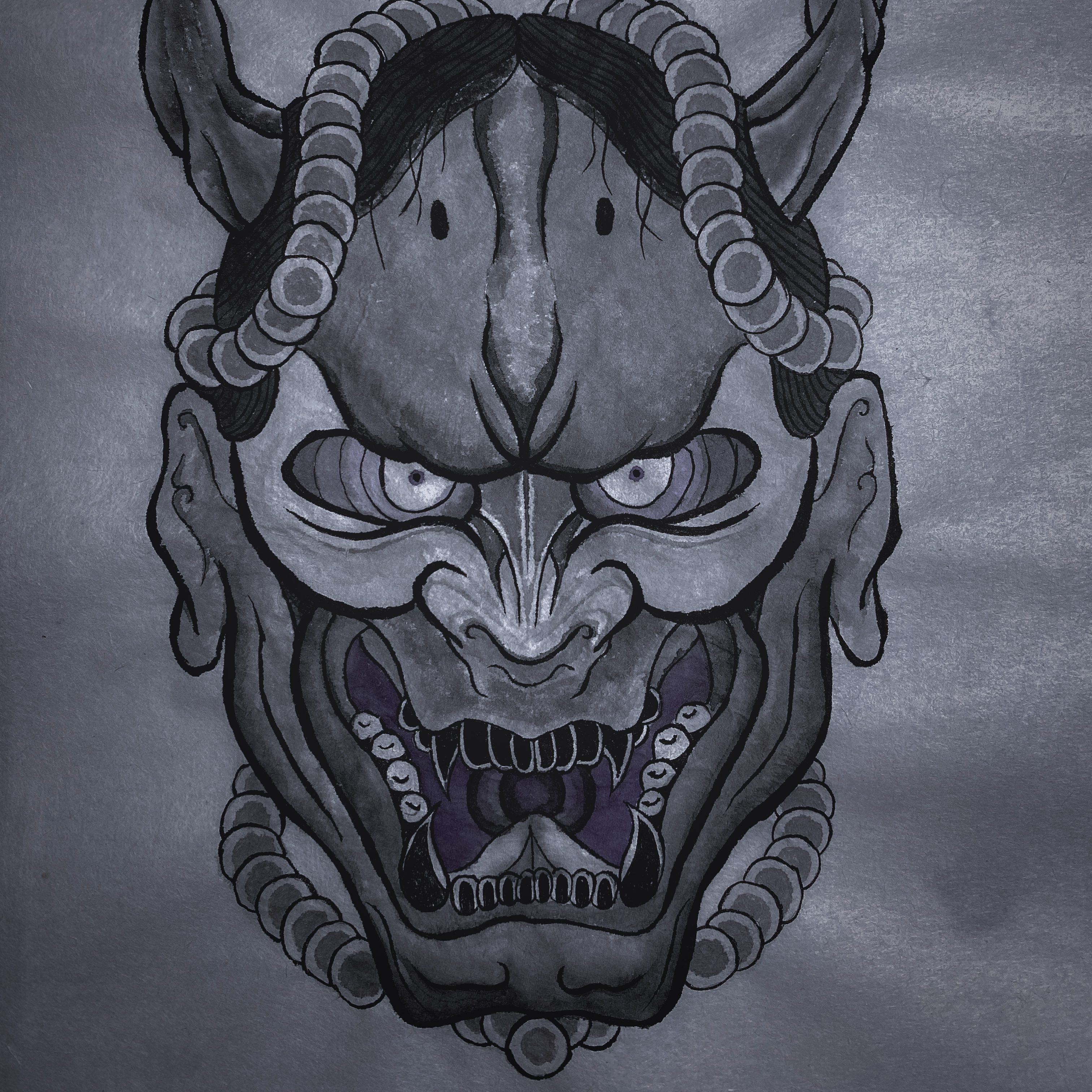
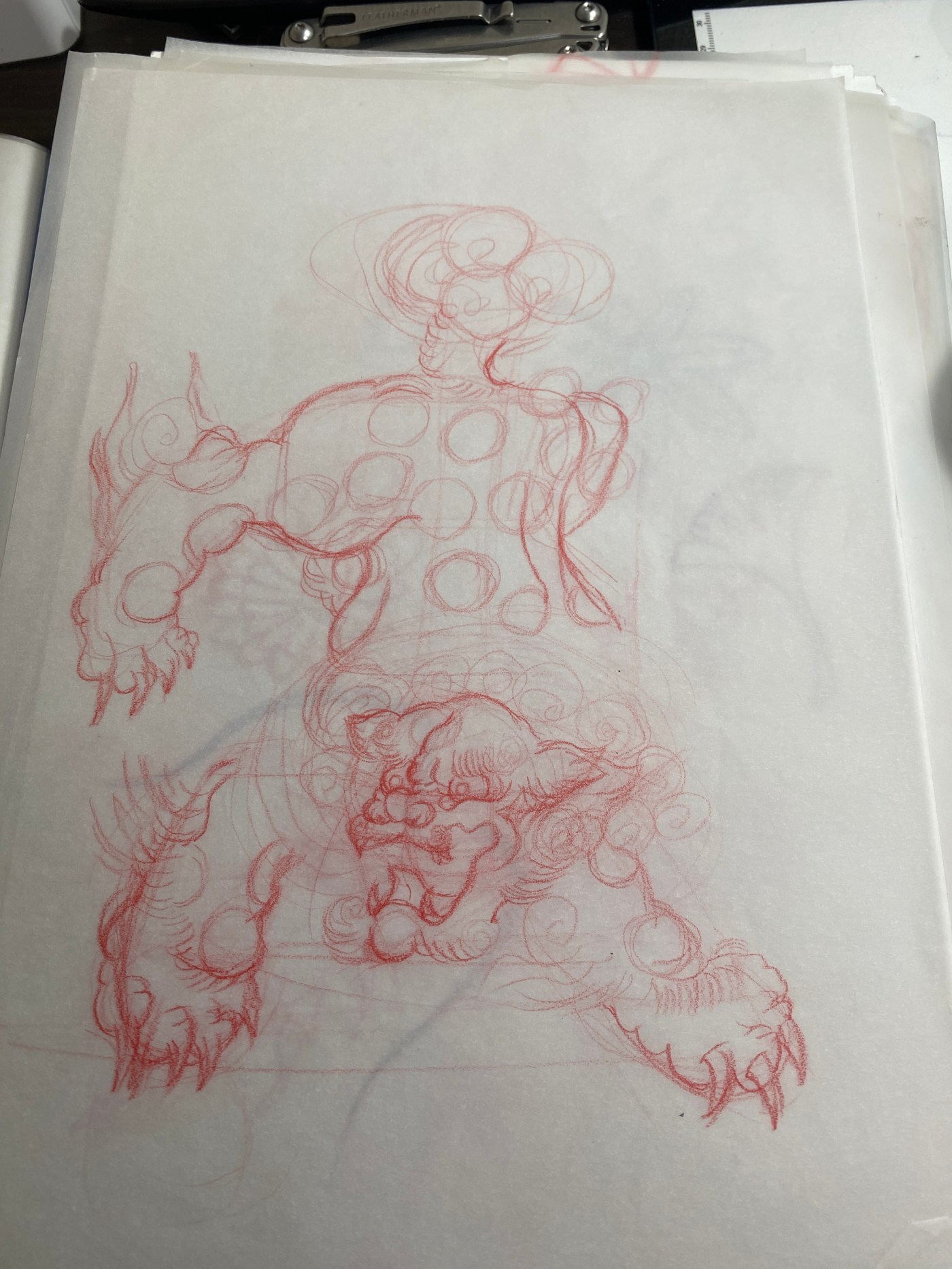
The “Chinese lion” as a fantasy animal from China has a peculiar shape and appearance, with the sides of the head, neck, and tail covered with a large amount of hair swirling like a fireball, and several patterns scattered on the body and limbs. It is thought that the Mandala of the Two Realms of Esoteric Buddhism, which came to Japan in the 9th century, was the first to introduce these concepts and shapes to Japan.
People often ask, “How are they different from komainu? There is a theory that they are originally the same thing, with Tang lions coming directly from China and komainu coming via Korea. The word “komainu” was originally written “Korai” (the name of an old Korean dynasty), and the word “inu” roughly means “animal.
Although it does not seem to be generally accepted that there is a strict distinction between the two, the Heian-period book “Ruiju Zoyosho” says that a lion has an open mouth and no horns, while a komainu has a closed mouth and horns. Nowadays, however, most komainu have become lions and have lost their horns.
The komainu are generally placed in front of the main building of a shrine.
At Inari shrines, foxes are placed in place of komainu, and at Mimine Shrine in Chichibu, wolves are placed. Some shrines have cats, frogs, and rabbits. There are also expressions such as “the komainu were wolves” or “shrines with rabbit komainu,” so it is possible to interpret komainu as the name of the “gatekeeper” rather than the name of the animal.
In other words, “the komainu of ordinary shrines are lions, but in some unusual places there are komainu of cats and frogs. This is just my personal opinion.
唐獅子牡丹
By the way, lions are accompanied by peonies. Since ancient times, lions have been depicted with peonies in carvings at temples and shrines and in paintings on folding screens. Peonies, the king of flowers, go well with lions, the king of beasts, or rather, they go with nothing but peonies. It is not possible. There is a reason for this.
There is a saying, “A lion devours the worms within the lion’s body,” which originally comes from Buddhism, referring to people who harm the organization from within and those who return the favor. If left unchecked, a small insect lurking in the hair of the body can bring down even a lion, the king of all beasts. The insect dies when it is exposed to the night dew that drips from the peony flower. So the lion rests under the peony flower. It is also said that they eat them.
 japaneseteboritattoo
コメントを残す